Every garden seems to have one plant that quietly becomes everyone’s favorite.
Not because it’s flashy.
Not because it’s difficult to grow.
And certainly not because it’s constantly demanding attention.
It simply shows up every day, does an incredible amount of work behind the scenes, and somehow makes the whole garden a better place.
That’s borage.
If plants had résumés, borage would absolutely need a second page.
“Excellent with pollinators.”
“Strong team player.”
“Thrives under pressure.”
“Occasionally volunteers for next year’s garden without being asked.”
The funny thing is, many people have never even heard of it.
But ask almost any gardener who’s grown borage once, and you’ll probably hear something like:
“Oh… you’ll always have room for borage after that.”
And honestly?
I understand why.
Why Borage Deserves a Spot in Your Garden
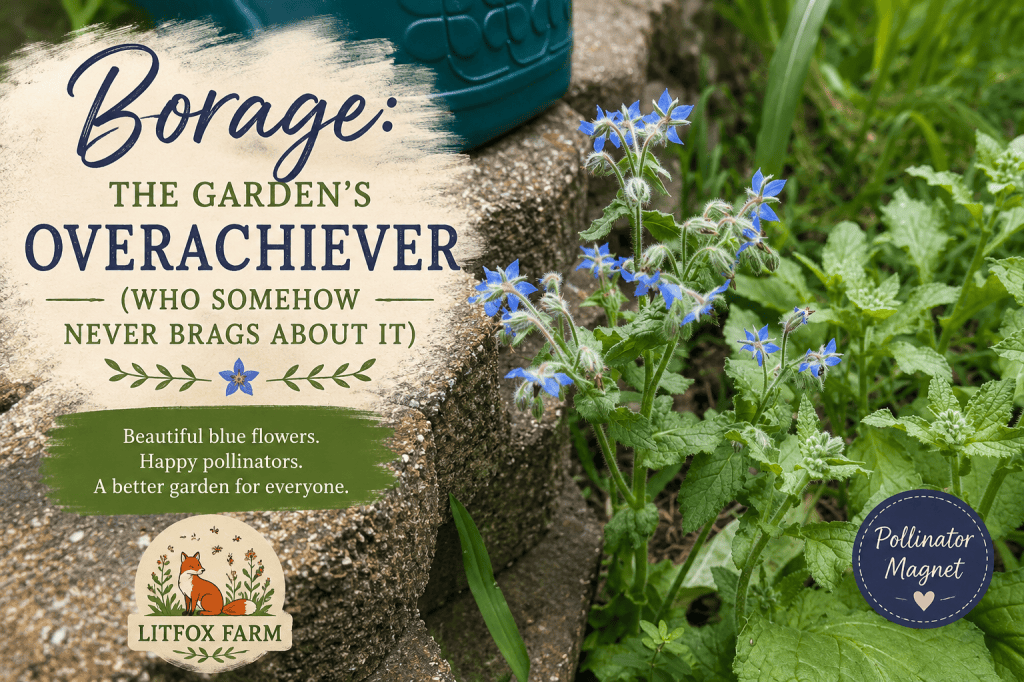
The first thing you’ll notice about borage is the flowers.
They’re unlike almost anything else in the vegetable garden.
Tiny, brilliant blue stars seem to float above fuzzy green stems, gently bobbing in the breeze as though they’re waving hello to every passing bee.
It’s one of those plants that makes people stop mid-conversation.
“Whoa… what are those blue flowers?”
That question happens a lot.
Beyond its good looks, borage has a reputation for simply being… helpful.
Gardeners often tuck it between vegetables, alongside herbs, or throughout flower beds because it seems happy almost anywhere there’s sunshine.
It doesn’t ask for constant fussing.
Once it’s settled in, it tends to get on with the business of being wonderfully useful.
Even better?
In many gardens, borage quietly drops a few seeds and returns the following year.
Not in an aggressive, “I’ve claimed your entire yard” sort of way (looking at you, mint).
More like a cheerful surprise.
“Oh, hello again!”
It’s the gardening equivalent of finding twenty dollars in last year’s jacket pocket.
The Pollinator Magnet
If your goal is to make bees ridiculously happy, plant borage.
Seriously.
On a warm summer afternoon, you’ll often hear the gentle hum before you even reach the plant.
Honeybees.
Bumblebees.
Tiny native bees.
Butterflies drifting through.
Hoverflies making surprisingly convincing impressions of bees.
Everyone seems to get the invitation.
Watching a healthy borage plant on a sunny day feels less like gardening and more like hosting the neighborhood’s busiest little café.
The flowers never seem empty for long.
One bee leaves.
Another arrives.
It’s a wonderful reminder that our gardens aren’t just ours.
They’re part of a much bigger community.
Many gardeners grow borage almost entirely for this reason.
Not because they need another flower.
Not because they need another herb.
Simply because supporting pollinators helps everything else in the garden, too.
Sometimes the smallest acts of generosity ripple farther than we ever realize.
It’s More Than Just a Pretty Flower
Of course, borage isn’t just beautiful.
Its cheerful blue blossoms are edible, making them one of those delightful little details that can turn an ordinary salad into something that looks straight out of a cottage garden cookbook.
Float a few flowers in lemonade.
Freeze them into ice cubes.
Scatter them across desserts.
Even if you only do it once, it’s surprisingly fun.
Borage has also been appreciated in traditional herbal practices for centuries. While modern herbal use deserves thoughtful research and appropriate guidance, it’s fascinating to realize that generations before us also found this humble plant worth growing.
Even if you never use it beyond enjoying the flowers, borage earns its place simply by bringing beauty into the garden.
And honestly…
That’s reason enough.
Growing Borage Without Overthinking It
One of my favorite things about borage is that it doesn’t seem terribly interested in perfection.
It enjoys sunshine.
It appreciates a little room to stretch.
Once established, it generally asks for very little beyond the occasional appreciative glance from the gardener walking by.
It’s the sort of plant that rewards observation more than constant intervention.
Plant it.
Watch it.
Smile every time another blue flower opens.
If you’re lucky, it may even decide your garden feels like home and leave a few seeds behind for next season.
Some gardeners carefully plan every square foot.
Others let plants like borage wander a little.
Both approaches are perfectly valid.
Borage simply has a way of encouraging us to loosen our grip on perfection.
A Little Beautiful Chaos
Not every plant stands perfectly upright.
Not every flower stays neatly inside the lines.
Borage certainly doesn’t.
It leans.
It stretches.
Sometimes it flops over just enough to make you wonder whether it has entirely forgotten how gravity works.
And somehow…
It only becomes more charming.
Cottage gardens have always embraced this sort of joyful imperfection.
Plants weave together.
Flowers mingle.
The edges blur.
The garden feels alive instead of carefully staged.
Perhaps every garden needs one plant that’s allowed to be a little wild.
One reminder that nature rarely grows in perfectly straight rows.
Borage seems more than happy to volunteer for the role.
Final Thoughts
Some plants ask us to notice them.
Others quietly improve everything around them without expecting applause.
Borage belongs in the second group.
It feeds pollinators.
Brightens flower beds.
Invites curious conversations.
Adds a splash of impossible blue to the summer garden.
And gently reminds us that some of the best discoveries happen by accident.
Maybe you planted it because someone recommended it.
Maybe you found it tucked into the corner of a nursery.
Maybe you simply liked the flowers.
Whatever brought it into your garden, don’t be surprised if it quietly earns a permanent place there.
Some plants have a funny way of becoming old friends.
Thinking About Adding Borage Next Year?
We’re putting together a complete guide:
Growing Borage for Pollinators, the Kitchen & the Cottage Garden
Inside, we’ll explore:
- Starting borage from seed
- Companion planting throughout the garden
- Harvesting flowers and leaves
- Saving seeds for future seasons
- Traditional culinary and herbal uses
- Creating a thriving pollinator-friendly garden with borage at its heart
If that sounds like your kind of garden adventure, we’d love to have you along.
Join the waitlist, and we’ll let you know as soon as Growing Borage for Pollinators, the Kitchen & the Cottage Garden is ready.
🌿 Feral Thought of the Day: If your borage starts making friends with every bee in the neighborhood, congratulations—you’ve accidentally become the host of the hottest summer party in town. 🐝🌼
 LitFox Farm