Tag: wildlife garden

  • Don’t Throw Away Your Leaves (Your Garden Will Judge You… Gently)

    Don’t Throw Away Your Leaves (Your Garden Will Judge You… Gently)

    Every October, something slightly funny happens.

    Trees spend months growing thousands of perfectly good leaves…

    Then they politely drop them exactly where they’ll do the most good.

    And what do many of us do?

    We spend an entire weekend stuffing those leaves into paper bags like they’ve committed some sort of botanical crime.

    Somewhere deep in the woods, Mother Nature is probably watching all of this with a warm cup of tea, quietly wondering why humans insist on making yard work so much harder than it needs to be.

    Now, don’t get me wrong.

    I’m not suggesting you abandon all hope and let your front walkway disappear beneath three feet of maple leaves. Your mail carrier deserves better than that.

    But maybe…

    Just maybe…

    Your garden would appreciate if you kept a few of those leaves around.

    Nature Already Knows What She’s Doing

    Take a walk through any healthy forest in autumn.

    Nobody’s out there with a leaf blower.

    No one is hauling fifty paper bags to the curb.

    The leaves simply fall.

    They settle onto the forest floor, where they slowly begin becoming something entirely new.

    Over time, rain, fungi, insects, worms, and countless tiny organisms quietly transform those leaves into rich, dark soil.

    That soft layer beneath your hiking boots?

    Much of it started as fallen leaves.

    Forests have been recycling their own “yard waste” for millions of years without a single municipal pickup schedule.

    Turns out…

    Nature has a pretty good system.

    Why Gardeners Love Fallen Leaves

    Once you start looking at leaves differently, it’s hard to see them as garbage anymore.

    They’re more like a seasonal care package from the trees.

    A thick layer of leaves around garden beds can help protect the soil from harsh winter weather while quietly reducing weeds at the same time.

    Add some to your compost pile, and they’ll become one of the important ingredients that eventually turns kitchen scraps and garden clippings into rich compost.

    Pile them in the right place, and over time they slowly become leaf mold—a wonderfully crumbly material that gardeners absolutely adore.

    Even the insects appreciate them.

    Many butterflies, moths, beetles, and other beneficial creatures spend the colder months tucked safely beneath fallen leaves.

    Leaving a few natural areas in the yard means you’re providing winter shelter for some of next year’s garden helpers.

    It’s amazing how much life is happening underneath what most people simply call “yard debris.”

    Not Every Leaf Has to Stay

    Now, before your neighbors start wondering whether you’ve officially embraced your “slightly feral” lifestyle a little too enthusiastically…

    Let’s be practical.

    It’s perfectly fine to rake leaves off sidewalks.

    Clear the driveway.

    Keep the lawn usable.

    Nobody’s suggesting your backyard should become a leaf wilderness.

    The idea isn’t to stop cleaning up.

    It’s simply to be a little more intentional about where those leaves end up.

    Instead of sending every last one to the curb, consider moving some into places where they’ll actually help.

    Garden beds.

    Around shrubs.

    The compost pile.

    A quiet corner where you’re slowly building leaf mold.

    Your future garden will thank you.

    And your back might appreciate carrying fewer bags, too.

    Free Is a Pretty Great Price

    Here’s one of my favorite gardening ironies.

    Every spring…

    Garden centers fill with bags of mulch.

    Gardeners happily load them into carts.

    Then they drive home after spending good money on something that looks remarkably similar to the leaves they paid someone to haul away six months earlier.

    I say this with love because…

    I’ve absolutely been there.

    Sometimes gardening teaches us that the best solutions were sitting in our own backyard all along.

    Free mulch.

    Free compost ingredients.

    Free soil improvement.

    It’s hard to argue with free.

    Especially when nature delivers it right on schedule every autumn.

    Embracing a Little Seasonal Mess

    One of my favorite parts of slow living is realizing that not everything has to look perfectly tidy all the time.

    A garden that’s alive often looks…

    Well…

    Alive.

    There might be a few leaves tucked beneath the shrubs.

    A brush pile waiting for winter birds.

    A corner where insects are quietly spending the colder months.

    The landscape changes with the seasons, and that’s part of its beauty.

    Golden leaves scattered across a garden bed don’t look neglected.

    They look like October.

    Sometimes we’ve been taught that a “good” yard is one where every fallen leaf is immediately removed.

    But maybe a truly healthy garden leaves just a little room for nature to finish what she started.

    There’s something deeply comforting about working with the seasons instead of constantly trying to tidy them away.

    Final Thoughts

    The older I get, the more I realize that gardening isn’t really about controlling nature.

    It’s about learning to cooperate with it.

    Autumn leaves aren’t the end of the growing season.

    They’re the beginning of the next one.

    They’re tomorrow’s compost.

    Next spring’s mulch.

    Future garden soil.

    A cozy winter blanket for insects and earthworms.

    Sometimes slowing down simply means recognizing when nature has already done the hard part for us.

    This October, maybe don’t rush to bag every single leaf.

    Leave a few beneath the shrubs.

    Spread some across the garden beds.

    Add a pile to the compost.

    Then pour yourself another cup of coffee, listen to the leaves crunch beneath your boots, and enjoy the season exactly as it arrives.

    Nature has been practicing autumn for a very long time.

    She’s gotten quite good at it.


    Want to Turn Your Yard Waste into Garden Gold?

    We’re putting together a complete guide:

    Composting Made Simple: Turning Everyday Yard Waste into Rich Garden Soil

    Inside, we’ll cover:

    • Easy backyard composting
    • Building healthy soil naturally
    • Creating and using leaf mold
    • Making the most of kitchen scraps
    • Common composting mistakes (and how to avoid them)
    • Using finished compost throughout the garden

    If you’ve ever looked at a pile of leaves and wondered whether they could become something better, this guide is for you.

    Join the waitlist, and we’ll let you know as soon as Composting Made Simple is ready.

    Until then, maybe let the trees do a little of the gardening this fall.


    🍂 Feral Thought of the Day: If your neighbors think you’re “forgetting” to rake a corner of the yard, just smile. You’re not being lazy—you’ve hired nature to do the work for you.
  • Borage: The Garden’s Overachiever (Who Somehow Never Brags About It)

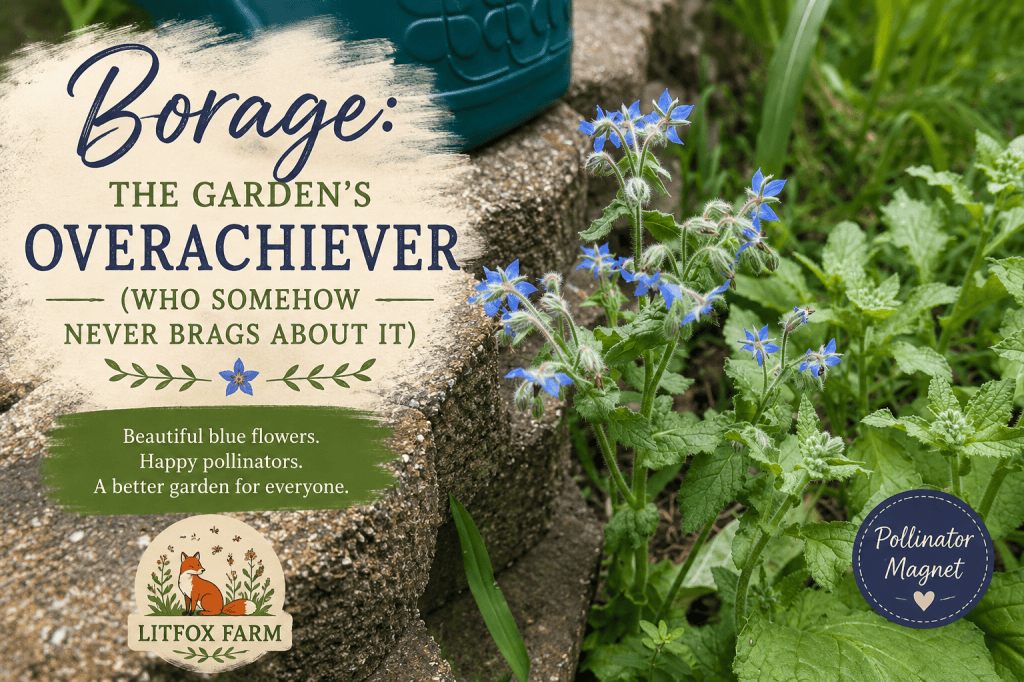
    Borage: The Garden’s Overachiever (Who Somehow Never Brags About It)

    Every garden seems to have one plant that quietly becomes everyone’s favorite.

    Not because it’s flashy.

    Not because it’s difficult to grow.

    And certainly not because it’s constantly demanding attention.

    It simply shows up every day, does an incredible amount of work behind the scenes, and somehow makes the whole garden a better place.

    That’s borage.

    If plants had résumés, borage would absolutely need a second page.

    “Excellent with pollinators.”

    “Strong team player.”

    “Thrives under pressure.”

    “Occasionally volunteers for next year’s garden without being asked.”

    The funny thing is, many people have never even heard of it.

    But ask almost any gardener who’s grown borage once, and you’ll probably hear something like:

    “Oh… you’ll always have room for borage after that.”

    And honestly?

    I understand why.

    Why Borage Deserves a Spot in Your Garden

    The first thing you’ll notice about borage is the flowers.

    They’re unlike almost anything else in the vegetable garden.

    Tiny, brilliant blue stars seem to float above fuzzy green stems, gently bobbing in the breeze as though they’re waving hello to every passing bee.

    It’s one of those plants that makes people stop mid-conversation.

    “Whoa… what are those blue flowers?”

    That question happens a lot.

    Beyond its good looks, borage has a reputation for simply being… helpful.

    Gardeners often tuck it between vegetables, alongside herbs, or throughout flower beds because it seems happy almost anywhere there’s sunshine.

    It doesn’t ask for constant fussing.

    Once it’s settled in, it tends to get on with the business of being wonderfully useful.

    Even better?

    In many gardens, borage quietly drops a few seeds and returns the following year.

    Not in an aggressive, “I’ve claimed your entire yard” sort of way (looking at you, mint).

    More like a cheerful surprise.

    “Oh, hello again!”

    It’s the gardening equivalent of finding twenty dollars in last year’s jacket pocket.

    The Pollinator Magnet

    If your goal is to make bees ridiculously happy, plant borage.

    Seriously.

    On a warm summer afternoon, you’ll often hear the gentle hum before you even reach the plant.

    Honeybees.

    Bumblebees.

    Tiny native bees.

    Butterflies drifting through.

    Hoverflies making surprisingly convincing impressions of bees.

    Everyone seems to get the invitation.

    Watching a healthy borage plant on a sunny day feels less like gardening and more like hosting the neighborhood’s busiest little café.

    The flowers never seem empty for long.

    One bee leaves.

    Another arrives.

    It’s a wonderful reminder that our gardens aren’t just ours.

    They’re part of a much bigger community.

    Many gardeners grow borage almost entirely for this reason.

    Not because they need another flower.

    Not because they need another herb.

    Simply because supporting pollinators helps everything else in the garden, too.

    Sometimes the smallest acts of generosity ripple farther than we ever realize.

    It’s More Than Just a Pretty Flower

    Of course, borage isn’t just beautiful.

    Its cheerful blue blossoms are edible, making them one of those delightful little details that can turn an ordinary salad into something that looks straight out of a cottage garden cookbook.

    Float a few flowers in lemonade.

    Freeze them into ice cubes.

    Scatter them across desserts.

    Even if you only do it once, it’s surprisingly fun.

    Borage has also been appreciated in traditional herbal practices for centuries. While modern herbal use deserves thoughtful research and appropriate guidance, it’s fascinating to realize that generations before us also found this humble plant worth growing.

    Even if you never use it beyond enjoying the flowers, borage earns its place simply by bringing beauty into the garden.

    And honestly…

    That’s reason enough.

    Growing Borage Without Overthinking It

    One of my favorite things about borage is that it doesn’t seem terribly interested in perfection.

    It enjoys sunshine.

    It appreciates a little room to stretch.

    Once established, it generally asks for very little beyond the occasional appreciative glance from the gardener walking by.

    It’s the sort of plant that rewards observation more than constant intervention.

    Plant it.

    Watch it.

    Smile every time another blue flower opens.

    If you’re lucky, it may even decide your garden feels like home and leave a few seeds behind for next season.

    Some gardeners carefully plan every square foot.

    Others let plants like borage wander a little.

    Both approaches are perfectly valid.

    Borage simply has a way of encouraging us to loosen our grip on perfection.

    A Little Beautiful Chaos

    Not every plant stands perfectly upright.

    Not every flower stays neatly inside the lines.

    Borage certainly doesn’t.

    It leans.

    It stretches.

    Sometimes it flops over just enough to make you wonder whether it has entirely forgotten how gravity works.

    And somehow…

    It only becomes more charming.

    Cottage gardens have always embraced this sort of joyful imperfection.

    Plants weave together.

    Flowers mingle.

    The edges blur.

    The garden feels alive instead of carefully staged.

    Perhaps every garden needs one plant that’s allowed to be a little wild.

    One reminder that nature rarely grows in perfectly straight rows.

    Borage seems more than happy to volunteer for the role.

    Final Thoughts

    Some plants ask us to notice them.

    Others quietly improve everything around them without expecting applause.

    Borage belongs in the second group.

    It feeds pollinators.

    Brightens flower beds.

    Invites curious conversations.

    Adds a splash of impossible blue to the summer garden.

    And gently reminds us that some of the best discoveries happen by accident.

    Maybe you planted it because someone recommended it.

    Maybe you found it tucked into the corner of a nursery.

    Maybe you simply liked the flowers.

    Whatever brought it into your garden, don’t be surprised if it quietly earns a permanent place there.

    Some plants have a funny way of becoming old friends.

    Thinking About Adding Borage Next Year?

    We’re putting together a complete guide:

    Growing Borage for Pollinators, the Kitchen & the Cottage Garden

    Inside, we’ll explore:

    • Starting borage from seed
    • Companion planting throughout the garden
    • Harvesting flowers and leaves
    • Saving seeds for future seasons
    • Traditional culinary and herbal uses
    • Creating a thriving pollinator-friendly garden with borage at its heart

    If that sounds like your kind of garden adventure, we’d love to have you along.

    Join the waitlist, and we’ll let you know as soon as Growing Borage for Pollinators, the Kitchen & the Cottage Garden is ready.


    🌿 Feral Thought of the Day: If your borage starts making friends with every bee in the neighborhood, congratulations—you’ve accidentally become the host of the hottest summer party in town. 🐝🌼